

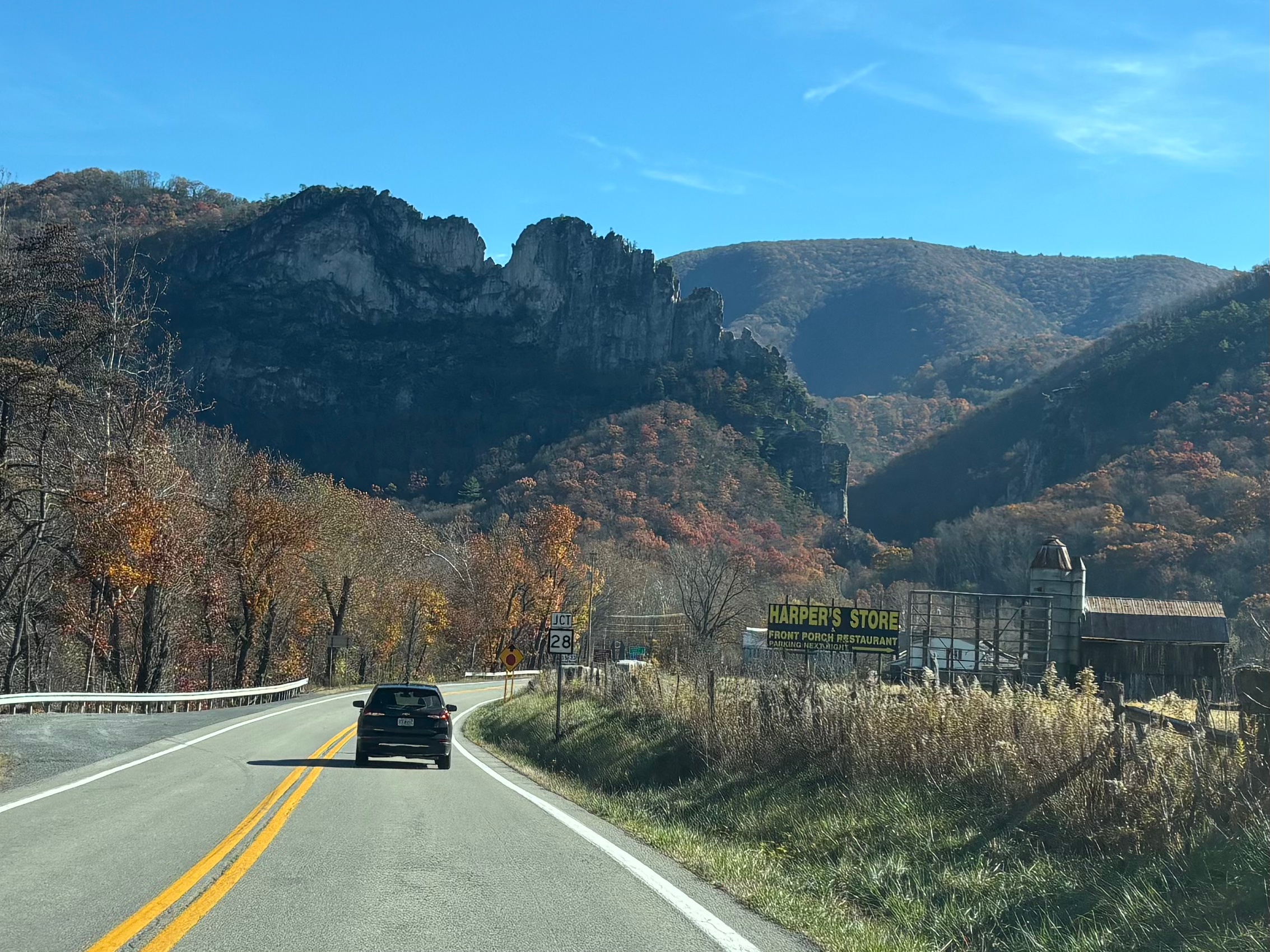
Seneca Rocks looks like a giant stone blade rising straight out of the West Virginia valley. It is tall, narrow, and dramatic, almost like a natural wall of rock. The cliffs are steep and jagged, and they stand out from everything around them. We learned that the rock is made of very hard quartzite that started as sand in an ancient ocean about 440 million years ago. Over time, pressure turned the sand into solid rock. Later, mountain-building forces pushed and folded the layers upward. The softer rocks around it slowly eroded away. The quartzite stayed behind because it was stronger. What we see today is the core that survived while everything else wore down!


Seneca Rocks was one of those places that instantly makes you slow down and take it all in. The hike was peaceful and not overly crowded, with the massive rock formations rising out of the valley in a way that feels almost unreal. After traveling to a much lower altitude, the weather was significantly warmer. The views along the trail made every step worth it. After hiking, we headed into the small town nearby for casual browsing in an old-fashioned general store and local lunch, which was quiet, friendly, and exactly the kind of spot you hope to find on a trip like this.

We did have one small disappointment when we found out the tourist museum was closed because of the government shutdown. It was a reminder of how unpredictable travel plans can be, especially when national sites are involved. Still, even without the museum, Seneca Rocks delivered everything we wanted: fresh air, beautiful scenery, and a calm break from everyday life. Sometimes the simple parts of a trip end up being the most memorable.



You must be logged in to post a comment.