
Fried dough rises slow like earth at break of day,
Then meets the oil like rain on stone,
It comes out strong and steady in its way,
With golden skin and a heart that feels like home.
It takes on sugar like the morning dew,
Or salt like air that drifts in from the sea,
Yet stays itself no matter what you do,
A solid thing that’s meant to truly be.
But batter poured in lines so thin and light
Becomes a crisp that fades as soon as seen,
And zeppole drift off like clouds in sight,
Soft, sweet, and gone before they settle in.
One feels like ground you trust beneath your feet,
The others just forgetible moments, quick, and sweet.
by Matthew Serwedes

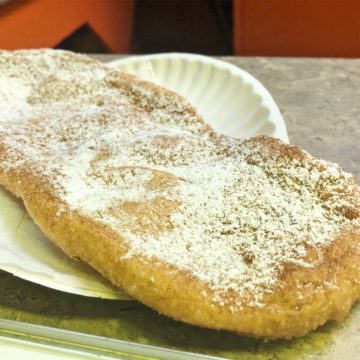
People often categorize New England fried dough in with carnival desserts like funnel cake and zeppole, but it really belongs to a different family altogether. To make fried dough, you first start with real yeast-raised bread, then stretch it flat and then deep fry. This gives fried dough a chewy, soft interior and a crisp outside. It eats more like fried bread than pastry. You should sprinkle powdered sugar and cinnamon on top, whether you are at a New Hampshire beach or a New England fair.
Funnel cake and zeppole, on the other hand, rely on batter. Artisans make funnel cake from a thin pourable batter that turns into crispy tubes. Zeppole are small, airy fritters that puffs into pastry-like balls. They’re closer to cream puffs. Fried dough is fried bread, while funnel cake and zeppole are fried pastry. Once you notice that distinction, it becomes obvious why New England fried dough feels heavier, more filling, and more flexible as a food, while most carnival treats stay in the realm of sweet snacks.


You must be logged in to post a comment.